Thursday, August 4, 2011

Germany (Berlin)

Berlin was our first stop where we had to stay in two different hostels. Our first night we stayed in the ultra-modern Generator Hostel.  We arrived at night and did not want to venture into the city, as we were staying in the outskirts of this huge city.  Fortunately, this brief stay at the Generator brought us to a wonderful Italian restaurant.  The following morning we threw on our backpacks and walked to the hostel that we would be staying in for the next 4 night.  We were anxious to see what Berlin would have in store for us, so we hopped on the tram and headed into the city. We found the transportation in Berlin to be very efficient as the trams ran every four or five minutes, covering the sprawling city.  Even better, the trams are free in Berlin.  Okay so maybe they aren’t free, but since no one checks tickets we took this opportunity to save a little money!


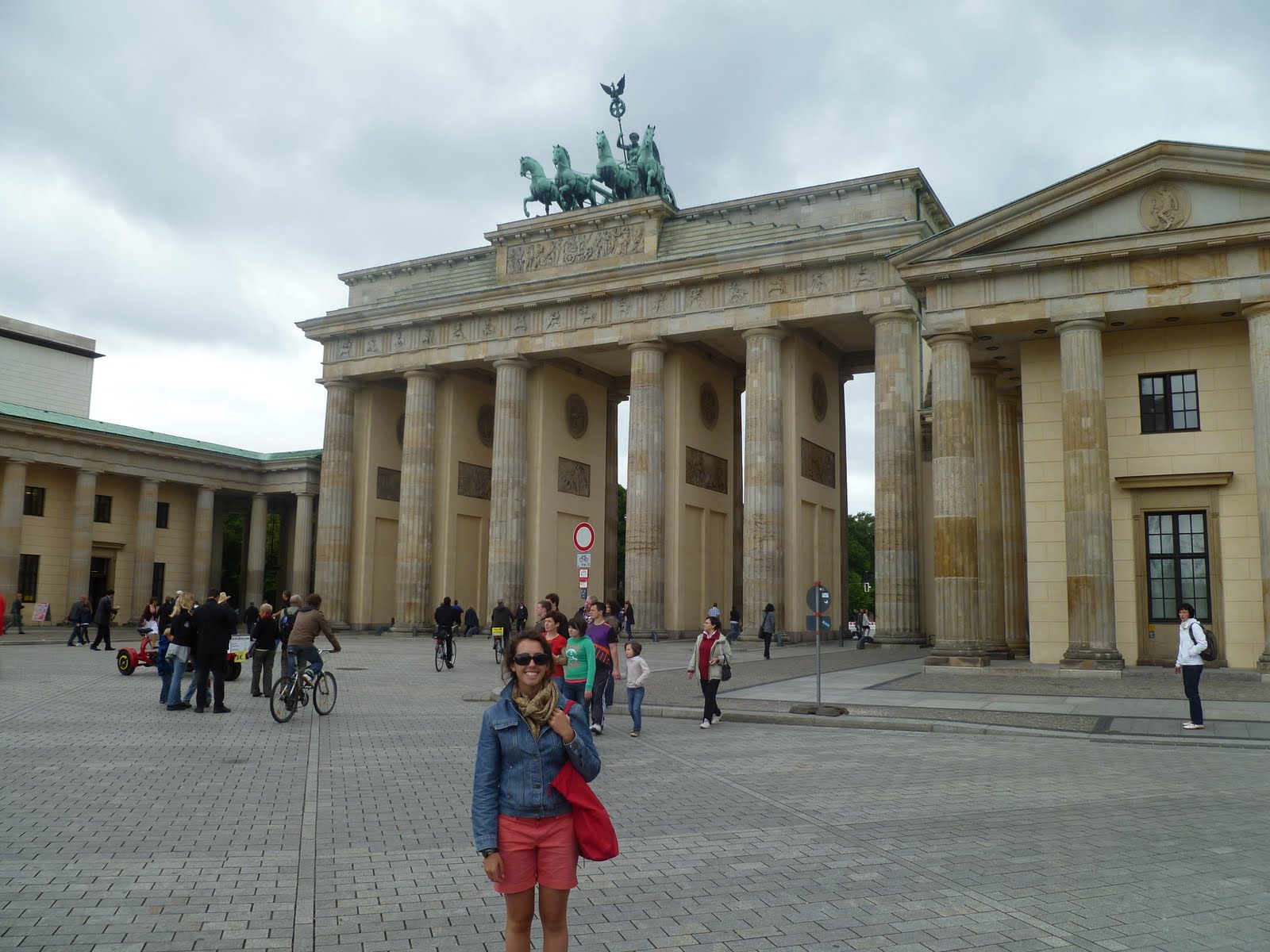
Marilyn at the Brandenburg Gate, the entrance to Berlin... this area isn't exactly rough around the edges!


Our first impression was that Berlin was a little rough around the edges and not as picturesque as some of the cities we had seen.  What this city lacked in beauty it made up for in history and character.  Everyone knows that Berlin was the center of world events for much of the 20th century, but being there and seeing pieces of history was exceptionally captivating.  We joined up with a walking tour and had a great guide who showed us some of the highlights and gave us some great historical anecdotes.  Later we went back to some of the sites and explored in more detail.


The Berliner Dom, one of the largest Protestant cathedrals in the world


The first thing we saw was the Holocaust Memorial.  Its lack of explanation and puzzling design elicit different thoughts and reactions in every viewer.  The memorial resembles a large maze, with tomb-like towers varying in height and an uneven ground.  The architect did not disclose much about what the memorial is supposed to represent, but he did say two things.  One is that he wants it to be a disorienting experience for the visitor which we both found it to be.  He was also influenced by the 15th century Jewish Cemetery in Prague. The Jewish people there had limited land to bury their dead so they were forced to bury the bodies stacked vertically creating a similarly uneven ground.  The museum which is directly underneath the memorial was a singularly sobering experience.  


The Berlin Holocaust Memorial


Nearby was the exact location that Hitler committed suicide in his underground bunker.  In comparison to the thought that had gone into the Holocaust Memorial, the complete lack of acknowledgment of this site is telling; the entire vicinity is simply an ordinary parking lot.  From there we moved on to the ‘Topography of Terror’.  This is a long memorial with plentiful information and pictorial evidence from the Nazi era.  It lays out in vivid detail how the Nazis came to power, spread fear and propaganda, and committed one of the worst atrocities in history.  It was situated between a section of still standing Berlin Wall and the rubble of the former SS headquarters. It was informative, captivating, and horrifying.  It took us nearly 5 hours to work our way through the exhibits over two days.  As terrible as this history must be for Germans to have, we found that Germany and the city of Berlin own up to what they did, and make no attempt to hide anything.  

The Topography of Terror Exhibits, Berlin Wall in the background


Close-up of a section of the Berlin Wall
Next we explored the evidence and relevant areas pertaining to the era of Soviet occupation.  Scattered throughout the city are remnants of the Berlin wall, guard towers, and checkpoints.  Wherever the wall was completely destroyed, a line of bricks has been placed in the road or sidewalk.  From everything you hear about the wall, it is actually a letdown when you see it in person.  It is no more than 12 feet high and maybe 8 inches thick.  We were expecting something closer to the Great Wall of China!  We walked past the famous Checkpoint Charlie (now a busy shopping district), where brinksmanship took the form of a standoff of dozens of tanks.  We also saw the former Communist Ministry Headquarters of East Berlin, a bleak, imposing grey building which has been featured in many movies.  Though it has been over twenty years since the wall fell, the separation of the city is still very evident.  Our hostel was deep inside the former East Berlin, and the neighborhood was dominated by the stark communist architecture.  West Berlin is still more affluent than the East, even though large investments in the Eastern infrastructure are improving conditions. Berlin was once a single city, then divided into two very different ones, and now has tried to reintegrate into a single entity.  As such, it has the very unique feel of a city in constant flux.


Section of the Berlin Wall covered in graffiti, near Checkpoint Charlie


The two of us at the pub crawl
Berlin is not just a city for history buffs; it has a very lively and diverse culture.  There is a solid mixture of new and old.  Berlin is known as a cutting edge city, it is the birthplace of techno after all.  We went on a pub crawl which clearly showed this dynamic.  The first two bars that we started out in were traditional pubs with history on the walls.  The last two stops were quite different.  One was a beach bar in landlocked Berlin and the other a large club that played modern electronic music.  All were a great time, and only got better as the night went along!


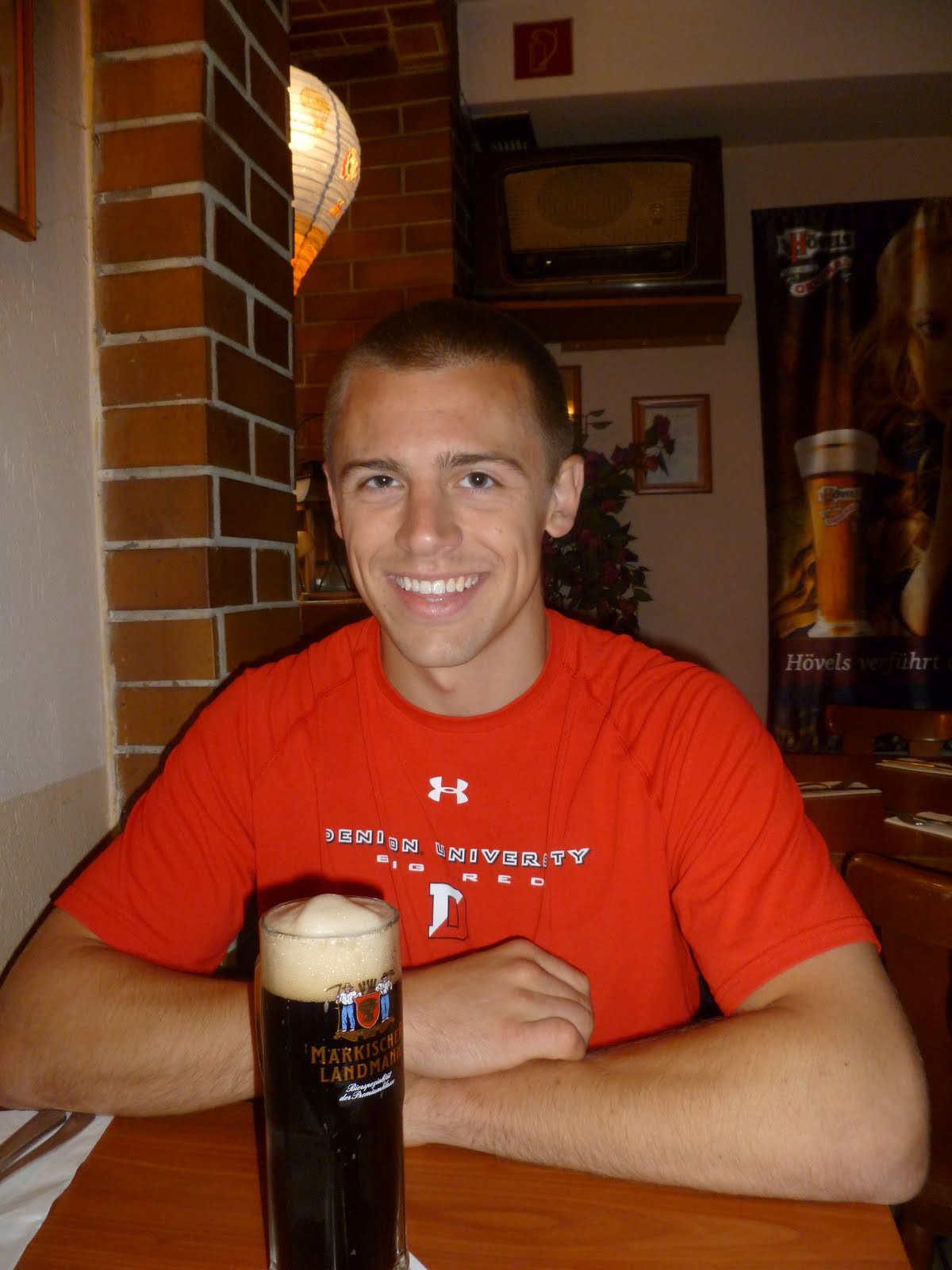
Speaking of drinking…the beer in Germany was by far our favorite.  We enjoyed nearly every variety of German beer, but Weissbier was in particular our favorite.  We were able to sample many types as beer is sold in single half liter bottles, often less than a dollar a bottle.  The only disappointment of Berlin was having to leave , but fortunately we will be returning to Germany later this month in Munich.


By the way, if anyone has tried to post a comment and could not, we have changed the settings now, and you should be able to at this point!

Monday, August 1, 2011

The Netherlands (Amsterdam)


The two of us purchased (or had great brothers who purchased) a bus pass that would take us throughout Europe; our first stop using the bus pass was Amsterdam.  The bus dropped us off in the center of the city, at the hostel most of the passengers were staying at.  We unfortunately had procrastinated on booking a place to stay, so we ended up staying on the outskirts giving us a nice lengthy walk to our hotel.  We ended up being very lucky because our hotel was right on the tram line, giving us easy access into the city.


View while walking to our hotel.  There are about 2500 houseboats in the Amsterdam canals


We didn’t really know what to expect with Amsterdam and were excited to explore the next morning.  We found a city pass that would give us free admission into about 30 museums, a canal tour, a metro pass, discounts to attractions and restaurants, and free items.  We figured it would be worth the cost because Amsterdam is an expensive city, with most of the museums charging a higher entrance fee than we were used to.  Having only two full days in the city we spent the first day running around, trying to take full advantage of our city pass.  This pass shaped our experience of Amsterdam because we went into many different museums that we otherwise might have passed up.  We also might have had too much fun scurrying around to make sure we got all the free items (most of them cappuccinos, giving us even more of a perk to continue running around, although we did score a Heineken bottle opener and some chocolates).

Near the Amsterdam City Center


When most people hear Amsterdam, they immediately think about the liberal use of sex and drugs that the city has become known for.  It is true, ‘alternative’ lifestyles are not just tolerated, but welcomed in Amsterdam, as has been the case for hundreds of years.  The extensive Red Light District, and numerous ‘coffee shops’ attest to that.  However, this forward thinking attitude extends to other areas as well.  The city (and country, for that matter) has needed meticulous planning and engineering since its inception since it lies almost completely below sea level.  People are also very environmentally conscious in Amsterdam; almost everyone gets around on a bike or using public transport.  It took Matt a while to get used to all the bike traffic… luckily Marilyn was there to pull him out harm’s way on several occasions.  Also, at the main train station, there is a multilevel parking garage… for bicycles.

Parking garage... sorry for the obstructed view!


Bikes lining the edges of the canal


The old grain measuring hall used by the East India Company
To launch our cultural tour we began with two museums dedicated to the history of Amsterdam.  Amsterdam’s golden age occurred due to the first major multinational corporations, the East India Trade and West India Trade Companies.  The museums also detailed the formation of the complex canal and waterlock system that is essential to keep the city from flooding.  While Venice is often what comes to mind when thinking of a city with canals, Amsterdam actually has more which add tremendously to the beauty of the city.  We finished off our first day at the most famous museum, the Van Gogh Museum.  It is filled with over 200 of his paintings, as well as sketches and other pieces of work.  Seeing the paintings in person was a much different experience than seeing a print of one.  The texture and detail were very impressive, although the vast number of works we saw was overwhelming after our long first day in the city.


View of houses on canal.  Many houses used to be warehouses for the trade industry


The following day we started off with the canal tour.  Most of the cities we had visited also had canals, but this was our first time taking a tour.  While there is something to be said of seeing a city from the perspective of the canals, we wouldn’t recommend one in this city.  Most of the boats, including the one we were in, were covered, making it difficult to get a good view and with an automated “tour guide” it was easy to zone out.


For the rest of our final day we decided to take a more relaxed approach, considering the pace of our previous day.  This allowed us to get a better feel of the city and appreciate the laid back, liberal atmosphere.  Amsterdam took us both by surprise with its beauty and vast history.  Once again, we found another city that we really enjoyed. Which city will be the first to break this streak? 


View from the Amsterdam Harbor.  One of the only good pictures from the canal tour

Tuesday, July 26, 2011

Belgium (Brussels, Bruges)

Our Belgium travels began in the EU and Belgium capital, Brussels.  It began with a 2 mile walk from the train station to our hotel with our packs in tow and a map that could be qualified as less than good. Our indirect route left us unsure of what to expect from this city.  After walking around for a bit, we decided to try out some Belgian fare for dinner.  Accustomed to American menus, we assumed that the entrees section contained main courses.  However, the real meaning was appetizers, and Matt was shocked to receive 6 tiny shrimp in garlic sauce as his entire meal, costing around $18!  A trip to the local burger joint, Quick Burger, was in order directly afterward. 

Brussels Royal Palace

Close to midnight, we finally made our way down to Grand Place.  Wandering down small, cobblestone streets in the dark we stumbled into the main square.  It was breathtaking!  Late at night, there were very few other people there; something we realized the next day was a rarity (this sight is actually quite disappointing during the day due to the vast number of tourists).  The amazing, centuries old buildings were lit up with floodlights and were spectacular to see.  There were several bars nearby, and we were up late sampling a few of the dozens of different Belgian beers available.


City Hall in Brussels Grand Place
We spent the next two days exploring the fairly large city.  Many of our favorite architectural sites were built during the rule of Leopold the 2nd.  When he was in power in the 1800s, he actually personally owned the Congo.  He ruthlessly exploited the native people there in quest of natural resources, and several great works of architecture in Brussels were completed because of this.  They were amazing to look at, but they were tainted by his actions.  Another famous sight is Manneken Pis, a little boy peeing into a fountain.  Little boy is not an exaggeration; it was tiny and disappointing, yet surprisingly popular in Brussels.  The best part of this statue is that a museum in Grand Place houses his 800 outfits which we were lucky enough to see. 

Government Building built for Leopold II

The Manneken Pis
Copies of the little Mann in Different Outfits


Outside the Brewery
Belgium is known for their beer and it was unlike anything we had been exposed to before.  A popular style in Belgium are different kinds of wheat beer; blonde, white, and some darker varieties.  Several of the beers tasted like a hybrid of champagne and beer and were sold in corked champagne style bottles.  There was also a large fruit infused selection (clearly Marilyn’s favorite because they tasted the least like beer).  On a tour of the Cantillion Brewery we learned about this type of beer, Lambic, that is very unique and native to Brussels.  It uses a very rare type of fermentation called spontaneous fermentation in which the yeasts are collected by letting the initial stage of beer, called wort, be exposed to the Brussels air (there are two strains of airborne yeast that are said to be unique to the region).  From there it is allowed to ferment for 3 years, and all sugars are removed, leaving a dry acidic drink that tastes more like a white wine or champagne than beer.  There are many imitations of Lambic that produce the drink more quickly, but the difference in taste is very apparent.  This brewery was off the beaten path but was well worth the walk.


The large wooden barrels where the Lambic ferments for three years


We hopped on a train and an hour later we arrived in Bruges.  For anyone who has seen the movie, it is no exaggeration.  The beauty of this small city is breathtaking and we instantly loved it.  It is picturesque at every turn, making it difficult to put the camera down.  The main attraction is the towering belfry, which you can climb to the top of (366 steps) for a great panoramic of the town and its surroundings.  There is also a Michelangelo statue of Madonna and her child housed in a cathedral which is one of his only works to leave Italy.  On display as well are a few drops of Christ’s blood contained in a vial, unfortunately Matt dropped the vial, but no one seemed too upset. 

Canals with Belfry in Background (this was set for extra long exposure, so the bright white objects in the canal are actually swans)

View while eating lunch

City Hall and Museum in the Burg
 
The Belfry in the Markt Square
View of the Town from the Belfry

View of the Markt Square from the Belfry

Canal with Restaurant and Tourboats

Some of these sights are true ‘tourist traps’.  A combination of long lines and a very narrow staircase made it quite hard to maneuver in the belfry.  With a population of about 26,000, Bruges has about as many tourists as natives.  However, as crowded as the city was, it did not take away from our experience.  Once we were away from main areas, Bruges was perfect for wandering around… always something beautiful or amazing around every corner.  What really made this city so incredible was that every house and shop matched and maintained the old fashion look.  Couple this with sprawling weeping willows, large gardens and parks, and a winding network of canals, and we could not ask for anything else.  We highly recommend a visit to this beautiful, unique city.

Matt and Marilyn on the canal bridge


The Cathedral

Canals with Belfry in Background

The Cathedral


Friday, July 15, 2011

Ireland (Dublin, Kilkenny, Cork)

Our trip to Ireland started out in Dublin.  As we explored the city we discovered that it reminded us of another city we were familiar with....Boston.  Dublin was filled with Irish pubs and small, windy streets that reminded us of home.  Our first night we treated ourselves to a traditional Irish meal, shepherds pie and bangers and mash.  It was a good, filling meal but nothing too extraordinary.  From then on and for the rest of our time in Ireland we ate almost exclusively from our beloved grocery store Tesco.

Halfway through a meal of bangers and mash

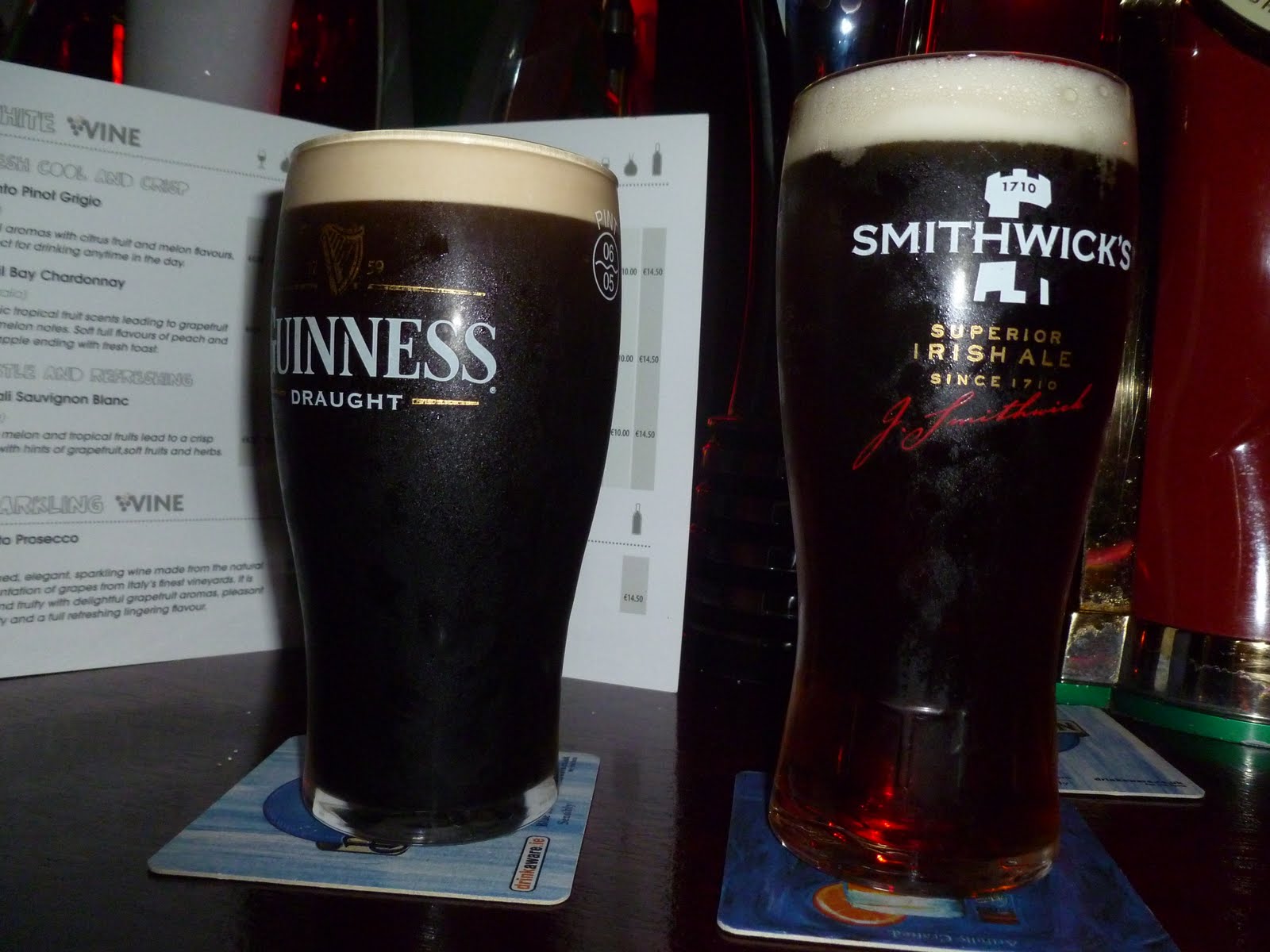
Although much of Dublin didn't seem like a novel experience, we enjoyed walking around St. Stephen's Green, Trinity College, and the medieval section of town.  The historical aspects of the city were impressive and we spent our nights listening to (generally American) live music played on acoustic guitar by Irish locals.  We enjoyed the pubs and the Guinness, however the prices were steep... 4 to 5 euro for a pint (around $7)!  Luckily tipping is not expected.

             Matt's Favorite                                                     Marilyn's Favorite

Thanks to Marilyn's Bethlehem grandma we saw a play at the Dublin Abbey Theatre called 'Translations'.  It was set in the early 1800s when most Irish still spoke Gaelic and the English decided to force their language on the locals.  The play was well done and it sparked our interest in Irish history, which we later briefly read up on.

Marilyn leaving the Abbey Theatre after the show


The next stop was a much smaller town called Kilkenny, southwest of Dublin.  This town felt more authentic than Dublin since it catered less to tourists.  It was filled with beautiful cathedrals, and the Nore River ran through the center of town.  The main attraction, though, was a medieval castle which had recently been thoroughly restored and was open to the public.

Kilkenny Castle on the Nore River

Upon arrival to our hostel on the outskirts of town, we found nobody home and a note instructing us to call the number 00353863843890.  A few more digits than we were used to, but we decided to give it a try using our international phone.  After our many attempts proved futile we walked down to the pay phone.  The pay phone informed us that this number no longer existed.  We messed around with it for a while, getting a little nervous as most of the shops around us were closed since it was Sunday and we had 40 pounds on our back.  When we finally went into the only open store to be told by the shopkeeper that we just had to remove the 2nd-5th number. Obviously. How dumb could we be? However, doing so allowed us to contact the hostel staff and let us into the house.

One of the nights as we were walking in the city center we heard live music coming from a pub.  Following the music we entered a bar with the only authentic  Irish music we heard during our visit.  We listened to four local men playing a guitar, banjo, accordion, and a hand drum.  The bar staff was incredibly friendly and one of the girls taught Marilyn an Irish step dance.

Our favorite pub!


As sad as we were to leave Kilkenny, off to Cork we went.  Cork is considered by southerners to be the real capital of Ireland.  Cork is on the southern coast and like the two other cities we visited had rivers running through town.  We lucked out having a recently renovated hostel in a great location where we were able to meet other travelers and pick up some advice.  The compact city center allowed us to comfortably see the sights in one day.  Our two favorites were a cathedral near our hostel (names of cathedrals are already blending together) and University College Cork which housed historical Irish artifacts and had an exceptionally beautiful campus (putting St. Mikes and Tufts to shame).

University College Cork


Being in another city we were a little disappointed that we didn't see much of the Ireland you often see photographed so beautifully.  So, we decided to take a day trip from Cork to Kinsale, a small harbor town.  Matt was adamant about renting bikes which proved to be the best decision of the trip so far (right behind the decision by Marilyn to go to Kinsale).  We rode the bikes out to Charles Fort, a large star shaped fort built in the 1600's after castles had become outdated.  Since the fort was originally built to defend the narrow entrance to the Kinsale bay, there were wonderful views of the cliffs alongside the water.

Charles Fort on the Kinsale Bay

We spotted a walking trail that went along the edge of the bay, so we hopped on our bikes and followed the path as far as we could along the water.  When the trail ended to our left was a road. Not just any road. A road with the BIGGEST hill.  After 30 minutes of walking our bikes up the hill and some very minimal complaining by Marilyn we reached the top.  Once at the top of the rise we worked our way toward the seacoast by following narrow farming roads.  With no one else in sight we managed to stumble across a fantastic view of the open ocean.  The land ended abruptly with steep cliffs and crop fields that went right to the edge.  It was breathtaking and everything we had imagined that Ireland would entail. 


We had a wonderful time in Ireland, filled with great beer, great music, great sights. Time for bed though, we have a 6am flight to catch for Belgium!